
This is the other end of the timeline from the ISS transit.
The first one was pure opportunism: borrowed gear, manual tracking, and a target that would absolutely not wait around while I got my act together.
This one is what happens a good few years later, once the hobby has properly sunk its hooks in.
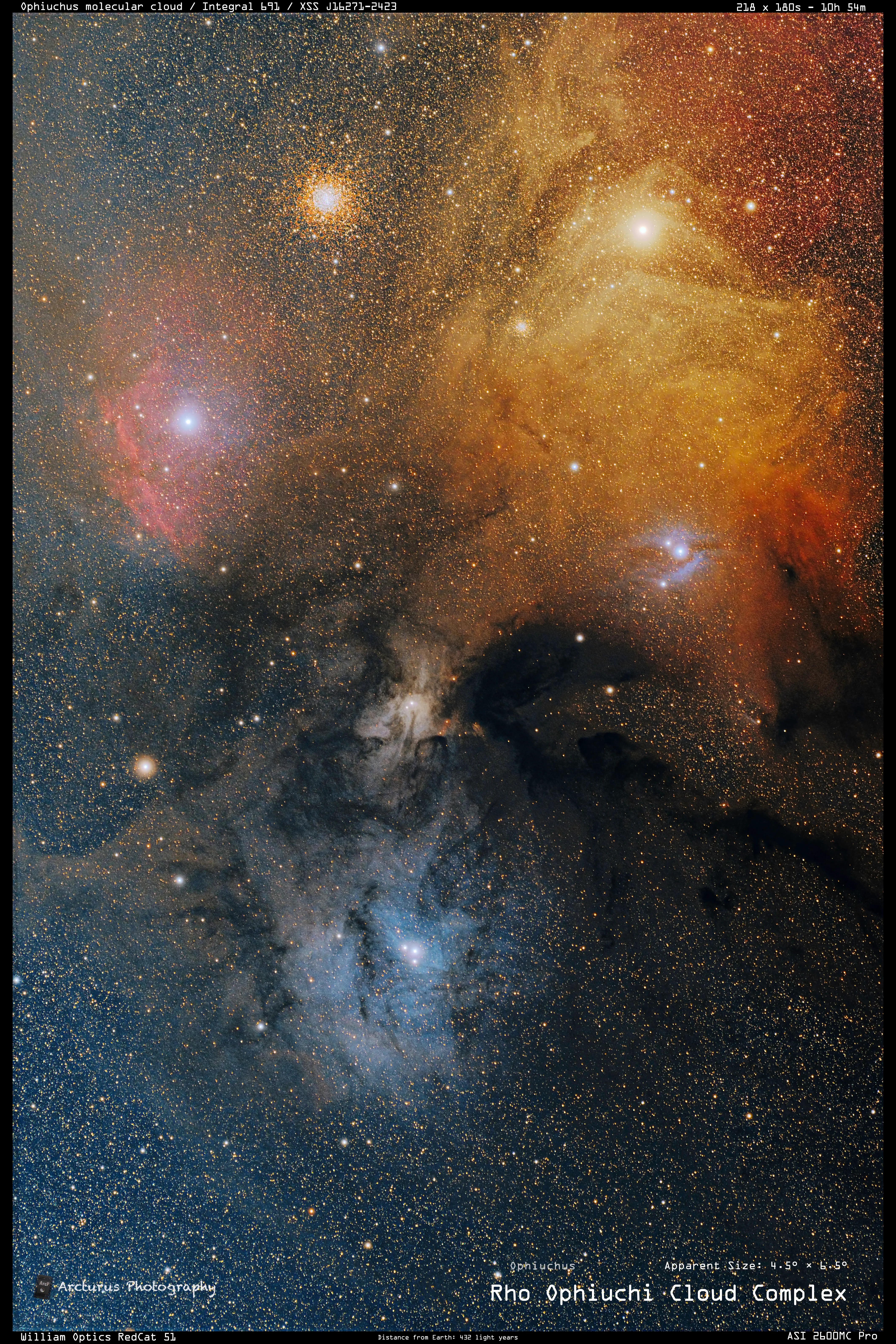
Rho Ophiuchi is not a target you stumble into by accident. It asks for patience, framing, clean data, and enough total time on target that the dust starts to separate itself into something rich instead of muddy. It is also huge. At roughly 4.5º x 6.5º, it sprawls across an enormous patch of sky and somehow manages to cram reflection nebula, dark dust, embedded structure, and general cosmic show-off behaviour into one field. For the central region, you are looking about 432 light years out, which is close enough in galactic terms to feel almost neighbourly and still impossibly far in any human one.
The frame itself tells the story pretty well: 218 x 180s, for a total of 10h 54m on the region.
Why this one matters
It is the image that makes the contrast obvious.
The 2015 transit shot proved I was hooked. This one proves I had actually started learning what to do about it.
There is still plenty I would tweak if I shot or processed it again now, but it already belongs to a very different phase of the journey. The target choice is deliberate, the integration time is doing real work, the gear has become a proper system, and the whole session feels less like a dare and more like a method.
What changed
This is the point where the workflow stopped being “see if I can get away with this” and started becoming repeatable. More integration, more intention, and far less reliance on luck doing me favours.
The field itself
Rho Ophiuchi is one of those targets that almost feels unfair. Dust lanes, reflection nebulosity, dark structure, colour everywhere, and enough complexity that you can spend a long time just staring at the background without getting bored.
It rewards time on target in a very obvious way. The more patient you are, the more the image stops looking like a nice patch of sky and starts looking like a place. Under a Bortle 6-7 suburban sky, that feels slightly rude. You know there is all that dust and structure overhead, but the sky itself is doing its best impression of an unhelpful orange soup. Getting this much signal out of that is part of the satisfaction.
What stands out looking back
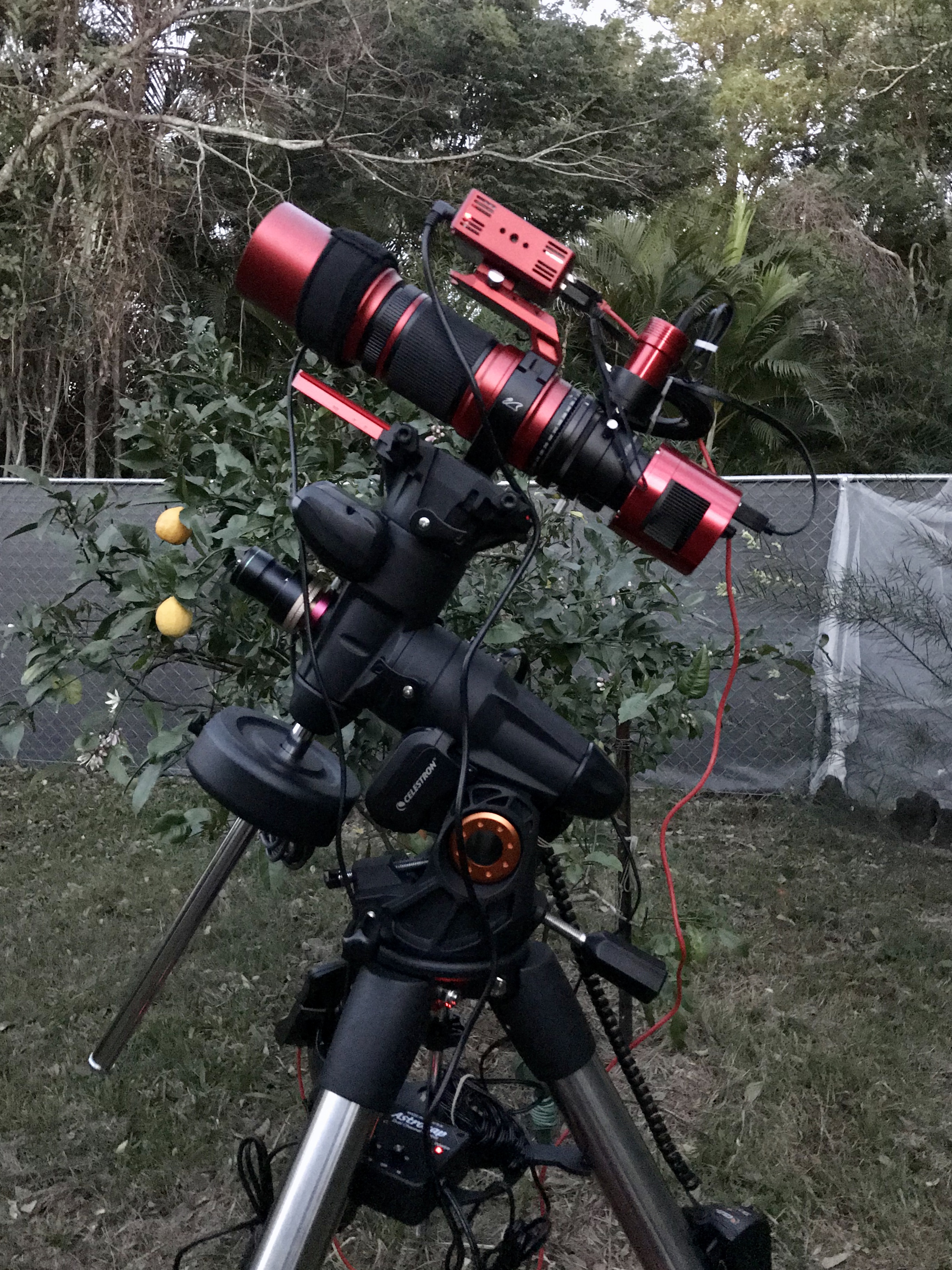
What stands out is not any single technical trick. It is the sense that the whole thing had matured. The framing is intentional rather than accidental. The total integration time is carrying the image. The result is built rather than snatched. The ASI2600MC Pro on the RedCat 51, riding the AVX with a Baader IR-CUT and Moon & Skyglow filter in the train, is a very different proposition from handholding a borrowed lens and hoping the ISS feels charitable.
That progression is exactly why I wanted this image in the section. It is probably the biggest and most spectacular area I have ever imaged, and it really does feel like a microcosm of the universe: colour, dust, reflection, darkness, depth, and a frankly unreasonable amount of stuff all happening at once.
The ISS frame is the origin story. This is the point where the obsession had become a practice.