About the collection
The birds they saware the birds we see.
My father started taking me birdwatching when I was very young. Long before I became an ecologist, I was fascinated by birds, bird books and the illustrations in them. That fascination has never gone away.
The birds in these plates were living animals, observed by people who found them worth watching, describing and painting.
Historical bird art is scattered across libraries, museums, archives and the internet. Much of it is beautiful and scientifically important, yet it is often treated as though it belongs entirely to the past. I wanted to bring some of it together without creating a museum of old pictures.
In many cases, they are the same birds we can walk outside and see today. That continuity is extraordinary. Someone watched a bird two or three hundred years ago closely enough to paint the shape of its bill, the fall of a feather or the way it stood. I can still watch that same species now. So can you.
That shared act of looking is what matters to me.
I sometimes mourn the world represented by these works: a time when someone might devote much of a life to observing birds, travelling in search of them, describing them or trying to capture them on paper. At the same time, I love the thought that people across centuries have experienced much the same delight in birds. The books and paintings are historical, but the birds are not, except where we have managed to make them so.
Names have histories too
Science likes to name things, as I often tell my students. Classification helps us understand a complicated world, but the names we give things are products of their time. Taxonomy makes this especially clear.
Species have been split, combined, renamed and moved between genera. Birds once thought to be distinct are now treated as forms of the same species, while others once placed together are recognised as quite different. Some historical names describe concepts that no longer fit neatly anywhere in a modern checklist.
For that reason, I do not think earlier identifications should simply be replaced. The name printed beside a bird tells us how that bird was understood at a particular moment in history. Keeping it alongside the current identification allows the change itself to remain visible.
In this way, taxonomy becomes part of the collection’s history. It records the uncertainty, argument and occasional absurdity that arise when humans try to arrange the living world into categories.
The Linnaean system is useful, but it was not the only sophisticated way of understanding and naming the living world. Across Australia, Aboriginal and Torres Strait Islander peoples have developed rich systems of knowledge that connect birds with Country, language, season, behaviour, habitat, story and responsibility. These names and classifications are not simply alternative labels. They can carry ecological knowledge accumulated over generations, including where birds occur, how they move, what they sound like, when they breed and how they relate to other beings.
The Linnaean system gives us one valuable framework. It is not nature, and it is not the only brilliant system humans have developed for paying attention to birds. The birds remain stubbornly themselves, regardless of where we decide to file them.
A living collection
The Birds They Saw connects historical art with living birds. Where the evidence allows, each plate is traced from its original identification to its current taxonomic placement. The current bird is then connected to contemporary sources such as the Atlas of Living Australia, iNaturalist and BirdNET.
These links matter as much to me as the historical record because they take the bird back out of the book. You can look at an illustration made centuries ago, read the name its author knew, follow what happened to that name, listen to the species and see where people are recording it now. If you are fortunate enough to live within its range, you may even be able to go and find it yourself.
The collection is therefore not a completed historical archive. Taxonomy will change again. New evidence will alter identifications, records will improve and mistakes will be found. As those things happen, the collection should change with them.
The art
The scientific purpose of these plates should not obscure why many of them are compelling in the first place: they are beautiful.
Bird illustration demands close observation. An artist must notice proportion, posture, feather structure, colour, expression and the small details that distinguish one species from another. The results range from strictly descriptive scientific plates to works with extraordinary character and life.
That tradition is still alive. Contemporary bird artists continue to study birds closely and translate their observations into images that help other people notice them. Their work may appear in field guides, natural-history books, exhibitions, digital collections, classrooms or on the cards of a board game.
One joyful contemporary example is Wingspan, the bird-themed board game designed by Elizabeth Hargrave and published by Stonemaier Games in 2019. What interests me here is not the game itself — which is amazing! — but the art that gives its birds presence. The cards present individual species through carefully observed illustrations, each with its own posture, expression, colour, plumage and sense of character.
The artwork is created by an extraordinary team of women artists, including Natalia Rojas, Ana María Martínez Jaramillo and Beth Sobel. Their images do more than decorate the cards. They make the birds memorable. A player may encounter a species first as an illustration, notice its shape or colour, and later recognise it in a field guide, on a walk or in the world outside the game.
Bird art rewards close observation: the more carefully you look, the more detail you find.
The birds in Wingspan are not historical scientific plates, and the game is not part of this archive. But its artwork belongs to the same broad tradition of looking closely at birds and helping other people look closely too. It shows that bird illustration can move between contexts without losing its purpose. A bird can be represented in an eighteenth-century volume, a nineteenth-century lithograph, a modern field guide or a contemporary card, and in each case the image can invite us to see the species more clearly.
I love that bird art can live in such unexpected places. It can remain in an archive, hang in a museum, appear in a field guide, sit on a screen, be used in a classroom or be held in someone’s hands as part of a board game. The form changes, but the invitation is the same: look carefully.
I want the images in this collection to be seen at a scale that allows their work to be appreciated. Their source institutions, original records and rights information remain attached to them, and wherever possible the catalogue links back to those sources. The artist is not merely providing an illustration for a taxonomic record. The artwork is part of the record.
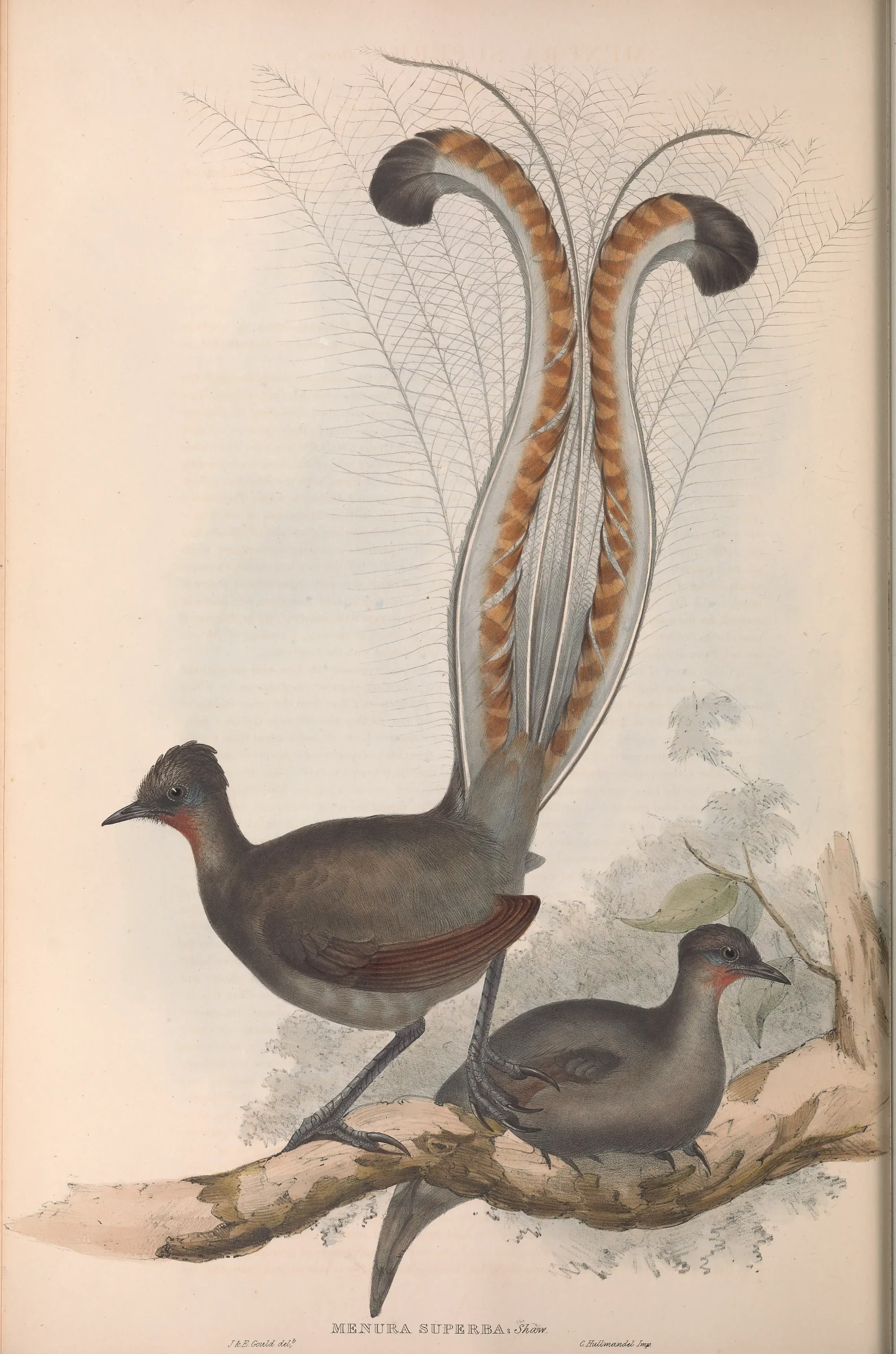 Historical plate · 1840–1848Superb LyrebirdJohn Gould project
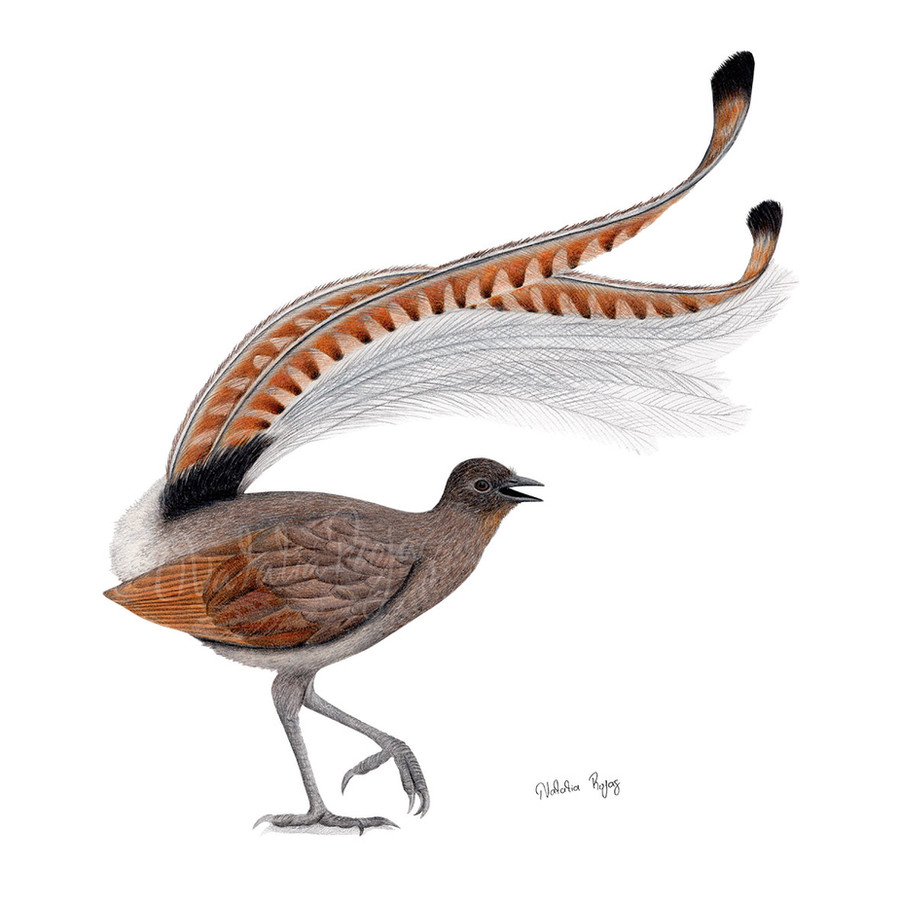 Contemporary illustrationSuperb LyrebirdNatalia Rojas for Wingspan: Oceania
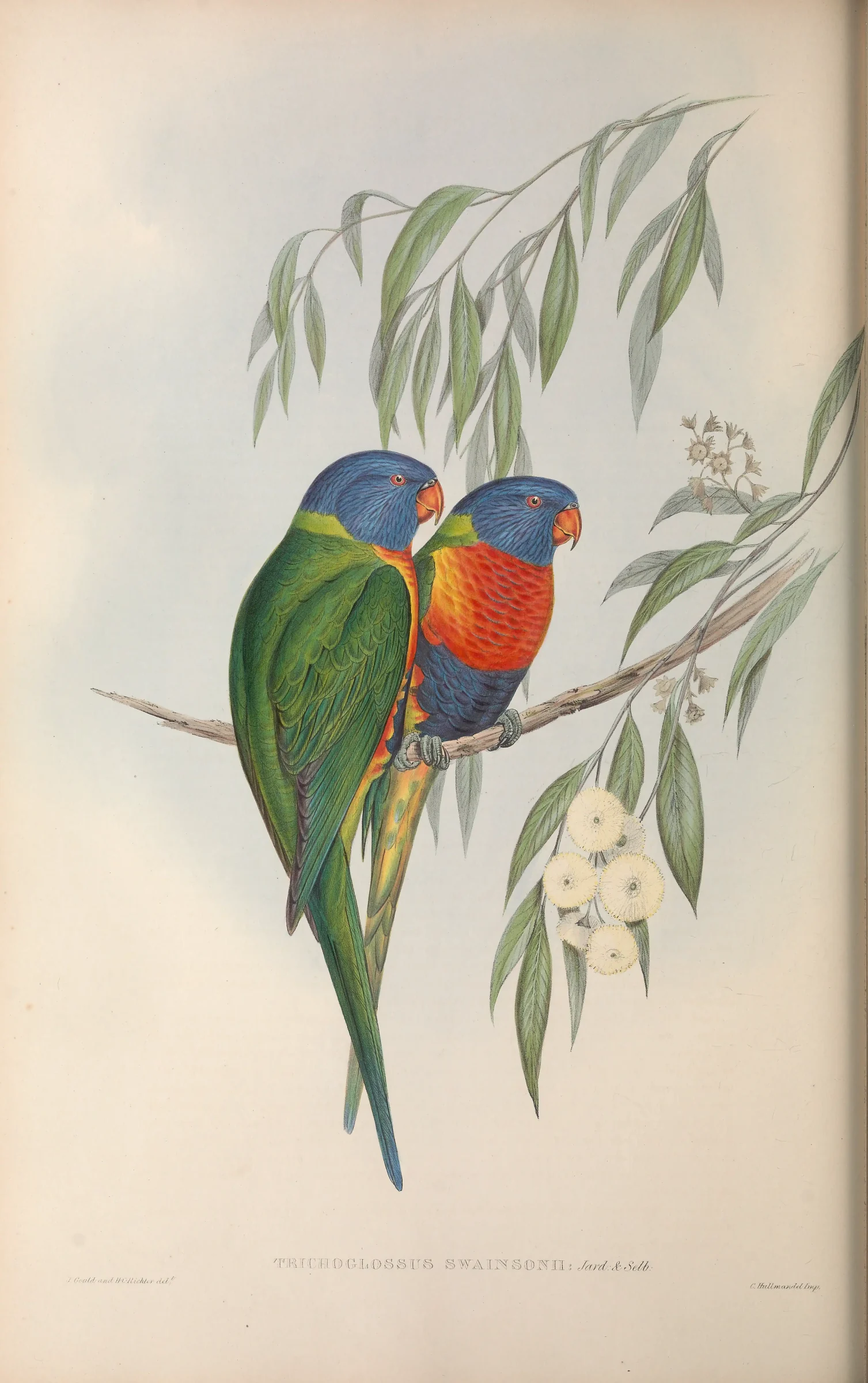 Historical plate · 1840–1848Rainbow LorikeetJohn Gould project
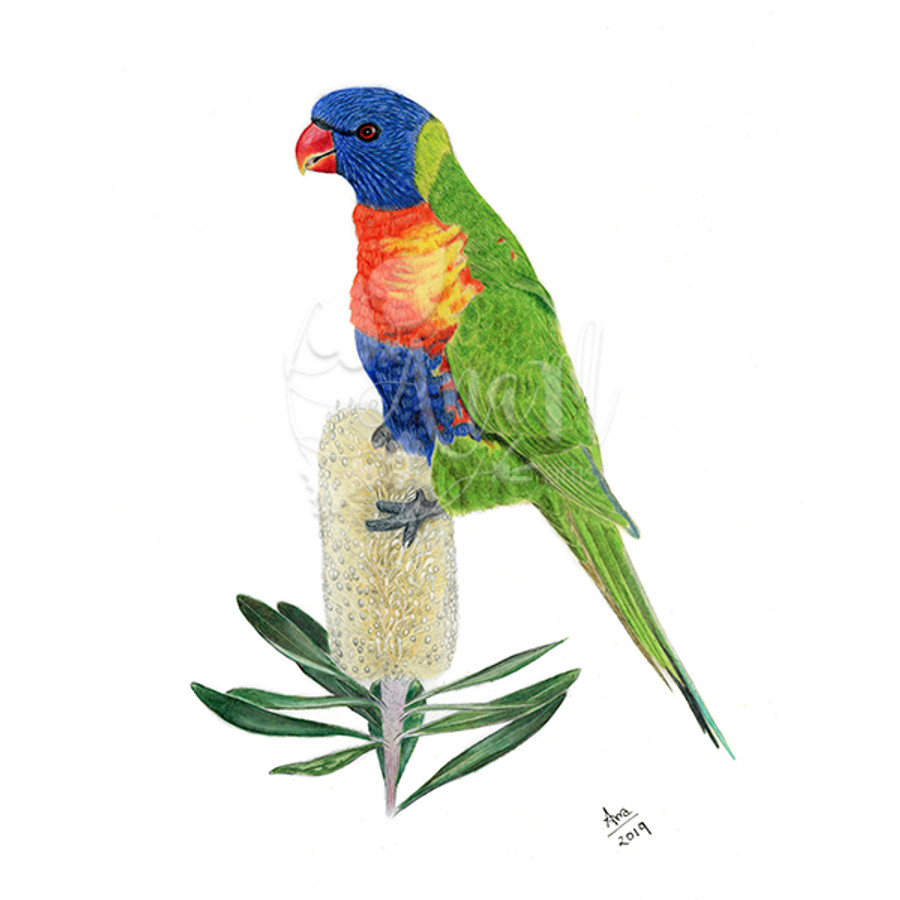 Contemporary illustrationRainbow LorikeetAna María Martínez Jaramillo for Wingspan: Oceania
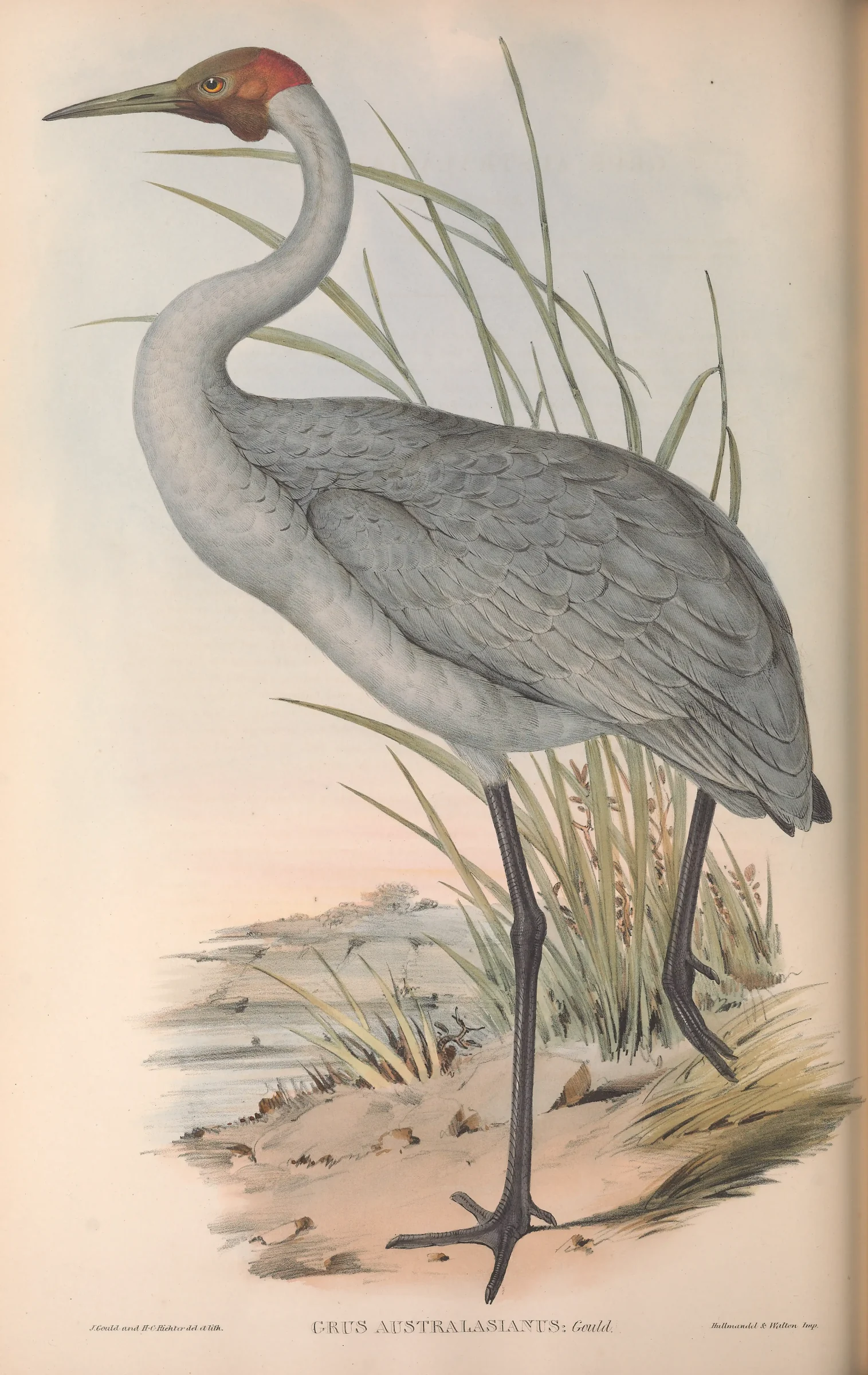 Historical plate · 1840–1848BrolgaJohn Gould project
 Contemporary illustrationBrolgaAna María Martínez Jaramillo for Wingspan: Oceania
Natalia Rojas and Ana María Martínez Jaramillo are the owners of their respective artworks and retain full copyright in them. No contemporary artwork file is copied into or distributed with this collection: each image is linked from the artist’s own website solely for enjoyment, education and the appreciation and discussion of bird art. Selecting a contemporary card opens the artist’s original page. Historical plates link to their catalogue records and public-domain source information.
Uncertainty belongs here
Not every historical bird can be identified securely. Captions can be ambiguous, names may have been reused, taxonomic concepts have changed and locality information may be incomplete. Sometimes, the surviving evidence simply does not allow a responsible modern identification.
Those cases remain in the collection because I would rather show uncertainty than manufacture certainty for the sake of a tidy catalogue. Unresolved records are kept visible as active research questions, and the evidence supporting each identification can be inspected.
This also means the collection can improve. If better evidence exists, I want to know about it.
Visit the research listThe collections
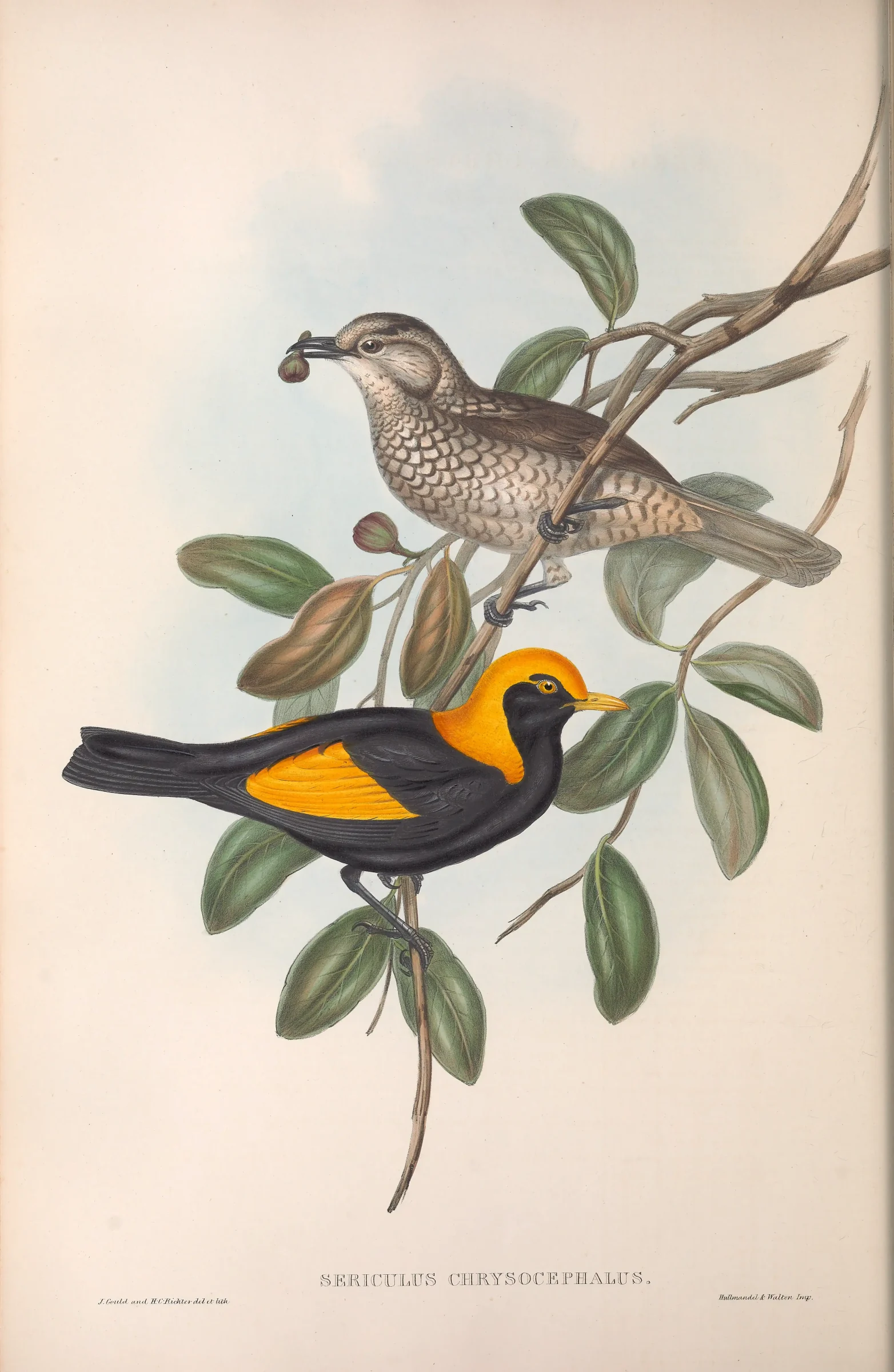
The archive currently brings together work by Broinowski, Buller and Keulemans, Diggles, Gould, and Mathews. More collections will come online as I have time to add them to the mix.
For now, this project is focused entirely on Australia. I have neither the time nor the space to take on the insane variety of birds found across the rest of the world — oh, the joys of being a teacher!
The images and source records come from public-domain collections held by the institutions identified on each artwork page. Wherever possible, the original institutional record remains only a click away.
Although these collections were produced in different places, at different times and for different purposes, they share a simple act of attention: someone saw a bird and thought it was worth recording.
Artists are still doing the same thing today, whether they are working on a scientific plate, a field guide, a digital illustration or a card for a board game.
Birds here, today. I also run a bird listening station. See which birds it’s hearing →
We are still looking at them.